
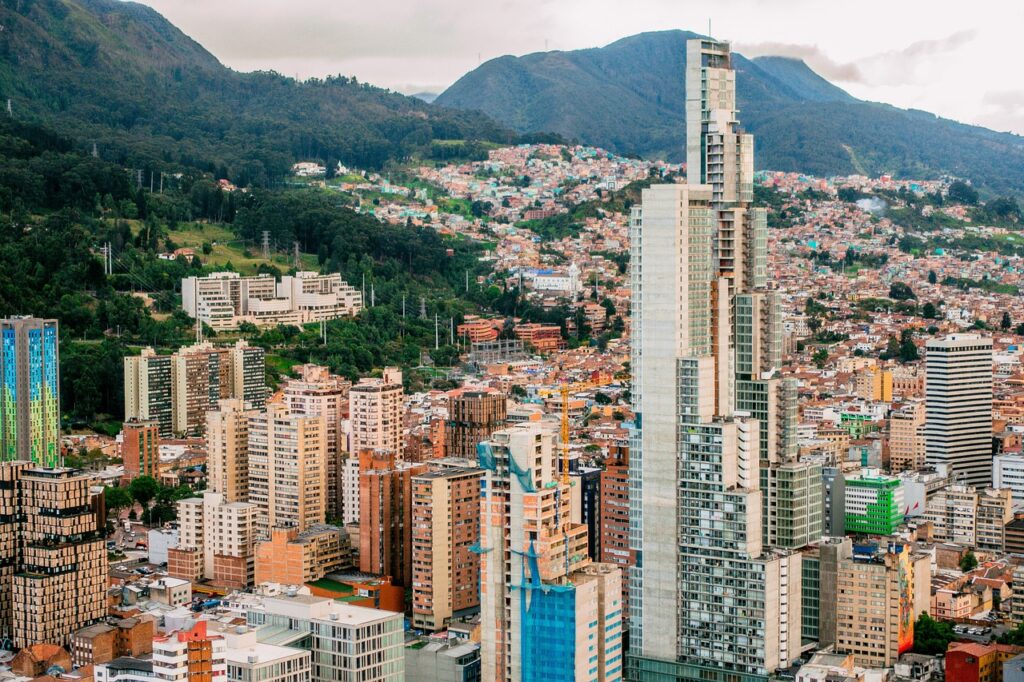
Investing in emerging markets is often considered riskier than investing in developed markets due to elevated levels of political risk. Political risk is high in Latin America due to regime changes and policy uncertainty, leading to financial market volatility. Increased political risk since the election of the first left-wing president in Colombia, Gustavo Petro, has led Colombian stocks to trade at a discount.
A wave of panic selling occurred as investors pulled their funds out of the country due to concerns over policies that could negatively impact their investments. In the frenzy to sell, Colombian stocks were indiscriminately sold off, regardless of the sound financial fundamentals of the companies. The Colombian stock market continues to be overlooked by investors, but there is optimism that 2024 could bring about a potential turnaround.
Times of increased volatility and higher perceived risk can provide investors with attractive opportunities in which the market can rapidly recover as political risk subsides. The Colombian stock market is undervalued and provides interesting investment opportunities to those able to stomach the volatility. This article assesses the current political risk in Colombia and explores its implications for future investment returns.
Colombia Elects First Left-Wing President to Address Inequality
On August 7th, 2022, Gustavo Petro made history by becoming the first leftist president of Colombia. Petro is a former guerrilla fighter from the Marxist armed guerilla movement named M19. His election campaign focused on tackling social justice issues in Colombia.
Gustavo Petro was chosen after protests broke out in 2021, sparked by a proposed tax reform bill by the government of former President Iván Duque aimed to increase taxes on middle and lower-income citizens. Widespread opposition and nationwide demonstrations quickly evolved to encompass broader grievances, including issues such as police violence, corruption, the government’s handling of the COVID-19 pandemic, poverty, and inequality.
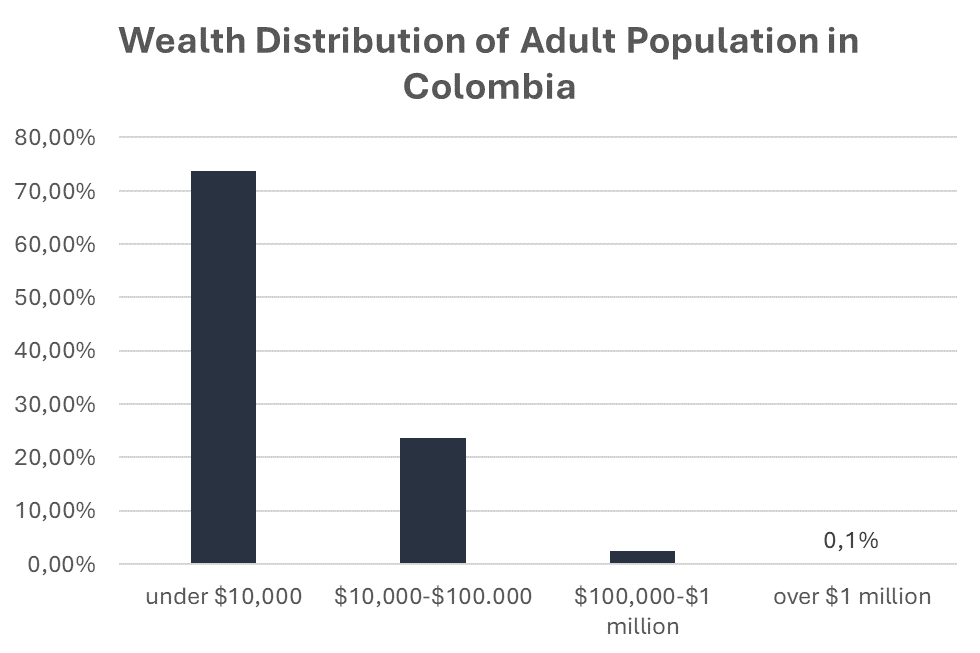
Colombian society is amongst the most unequal in the world with the top 10% having 73.1% of the nation’s wealth, meanwhile, the bottom half of the population retains a mere 1.6%. In 2022, the median wealth per adult was just $4,866, and only 2.6% of adults have a net worth of more than $100,000.
According to Petro, affluent Colombians have the moral obligation to help their fellow patriots to overcome poverty. Therefore, he aimed to reduce wealth inequality in Colombia through a “solidarity tax” on the wealthy. This instigated a capital flight of wealthy Colombians and foreign investors who rather would deploy their funds elsewhere, such as the Miami housing market.
Gustavo Petro’s Big Social Reforms
Besides the tax reform, Petro also aimed to reform in health, labor, and pensions to address the inequality in Colombia. All the reforms were proposed simultaneously in a tactic to push big reforms through early, before its bench could be weakened by the local elections in October 2023. Petro formed a strong alliances in government to ensure he had enough support in both chambers to pass his ambitious legislative agenda.
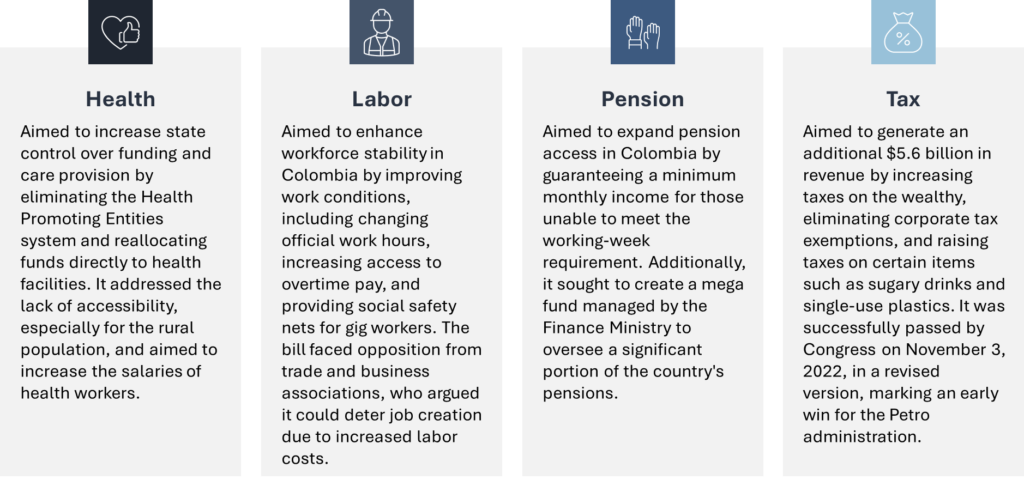
Various coalition members began to detach from the president, leaving Petro without the voting power to get his reforms approved. Only his tax proposal passed Congress early during his presidency on November 3, 2022. The prevailing legislative environment is expected to persistently hinder the president’s agenda throughout the remainder of his term, making it harder to push his health, labor, and pension reforms through Congress.
Petro Faces Setback in Local Elections
The regional elections in October 2023 eventually turned out to go in favor of the opposition as their candidates emerged victorious, securing mayoral, governor, and councilor positions nationwide. The opposition candidates emerged victorious in the recent mayoral elections, particularly in the major cities. Only two out of 32 provinces elected governors from Petro’s coalition, the Historic Pact.
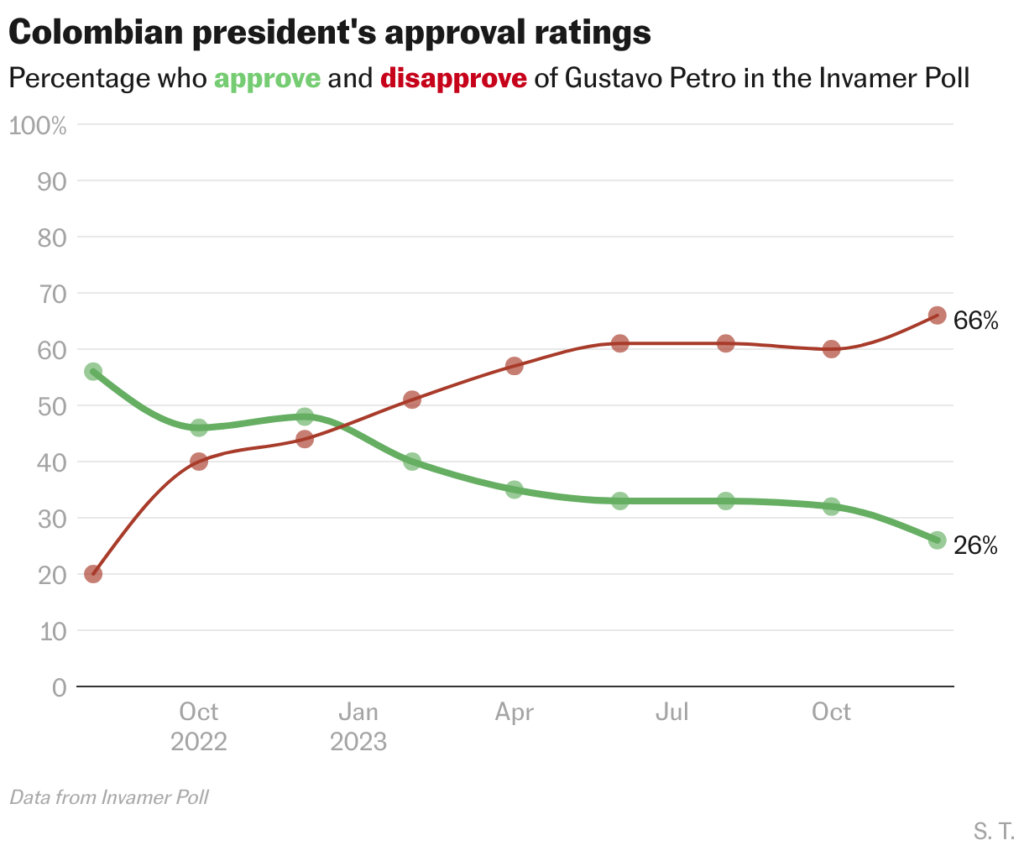
According to the Invamer Poll data, the approval rating of Petro has declined since winning the August 2022 elections due to political scandals. Rumors of corruption in his political party and the arrest of his son for drug-related charges led to a drop in public support. His attempts to legalize drug consumption, peace negotiations efforts with guerrilla groups such as the ELN, and proposal to halt oil and gas exploration led to great discontent
Many Colombians, particularly youngsters, are now moving abroad as they see no bright future in the country. Migration records reveal that within the last two years, approximately one million young Colombians emigrated, mainly due to concerns over security and economic instability.
Unattractive Investor Climate Works Counterproductive
The government of Gustavo Petroinvestment environment has deteriorated as companies are halting plans for further investments awaiting the effects of policy uncertainty. Despite continuing their business activities in Colombia, foreign companies are hesitant to invest in business expansion as long as there is no clear consensus on future policy changes.
Petro’s efforts to reduce poverty might work counterproductive as underinvestment and lower economic activity could provide for fewer employment opportunities. Colombia experienced an economic growth of 7.9% in 2022, which rapidly slowed down to 0.6% in 2023.
Central Bank Facing Increased Political Pressure
As global inflation picked up in 2021 and 2022, the Colombian central bank had to raise the interest rate to control inflation. Petro voiced his discontent on social media platform X stating: “The real economy is contracting primarily due to the elevated interest rates. I urge the central bank to decrease rates, considering our well-managed inflation.”
After several rate hikes the central maintained interest rates at 13,25% to contain inflation. Concerns arose regarding the potential impact of the El Niño weather phenomenon on food and energy prices. Also, the hike in minimum wages of 12% planned for 2024 could contribute to inflation.
In December 2023, the central bank announced its first rate cut in over three years despite inflationary pressure not having subsided in some sectors. Finance Minister Ricardo Bonilla’s political pressure to lower interest rates to 8% by the end of 2024 has contributed to the rate cuts. The annual inflation rate in Colombia in January 2024 stands at 8.35%, still far above the target rate of 3%.
Colombian Stock Market Reaction to Political Turmoil
Colombian assets plunged following Gustavo Petro’s leftist presidential win, fueled by fears of his plans to reduce reliance on raw materials and tax the wealthy. The peso dropped 5%, stocks fell 6%, and sovereign bonds underperformed in emerging markets. Concerns over Petro’s economic policies led to a sell-off in local assets, with Ecopetrol SA’s securities particularly hard hit.
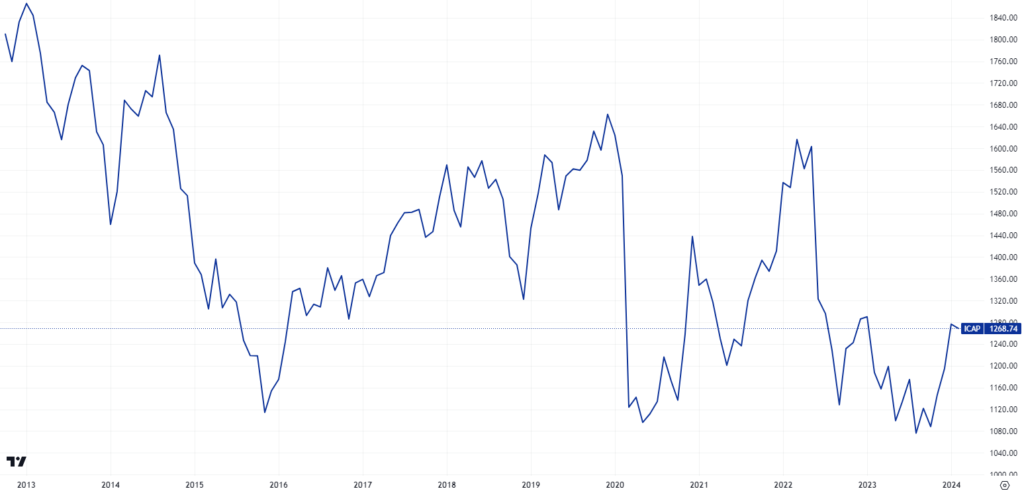
The MSCI COLCAP Index of Colombia is a market-capitalization weighted index that comprises the 25 most liquid stocks listed on the BVC (Bolsa de Valores de Colombia). It is one of the most significant leading indexes in the Colombian stock market, representing the performance of the top 25 companies in terms of liquidity. The index started to sell off in May 2022 when the first presidential election round on the 29th of May showed there was a probability for Gustavo Petro to win the presidency.
The downtrend in Colombian stocks ended after the opposition won the local elections in October 2023, which decreased the likelihood of further reform approvals by Congress. Since the August 2023 lows, the COLCAP has gained almost 18%.
Colombia at Risk of Losing Emerging Market Status
JPMorgan Chase & Co. raised concerns in a report suggesting a potential downgrade of Colombia by MSCI Inc. from emerging market to frontier status as Colombian stocks fail to meet liquidity requirements. Several Colombian stocks such as Bancolombia and Grupo Aval have already been kicked out of the FTSE indices due to liquidity issues.
A downgrade to frontier market status would lead to a forced sale of Colombian stocks and less capital inflow to the country. Struggling with unappealing macroeconomics and an uncertain political landscape will lead to less attention for Colombian markets.
Full Integration of Colombia, Chile, and Peru Stock Exchanges
Colombia, Chile, and Peru’s stock exchanges are set to fully integrate by early 2025, aiming to create a single, more competitive market. This convergence process involves unifying operations across three currencies and forming a single corporate entity over an estimated 18 to 24 months. NASDAQ will be in charge of the financial infrastructure unifying the markets.
The integration is expected to enhance market liquidity, competitiveness, and appeal to global investors. The integration of the three stock exchanges could improve economic development for a market of 100 million people.
Colombian Stocks: Attractive Valuations, Persistent Risk
The heightened political risk following the election of Gustavo Petro led to panic selling and the undervaluation of some quality stocks in Colombia. Currently, the Colombian stock market is trading at about 7x earnings compared to the emerging market average of 14.5x earnings. Low investor confidence might provide an opportunity to pick up some quality stocks that are currently undervalued.
The low visibility of Colombia makes it a niche market for investors willing to endure the risk in a country facing political uncertainty and unattractive macroeconomics. The government of Gustavo Petro lacks support to win new elections, arguing that political risk will eventually decrease.
Investors with a high-risk tolerance will be rewarded for early entry into the Colombian stock market. By leveraging their ability to navigate market uncertainties, they stand poised to potentially capitalize on the eventual stabilization and growth of the market.
Accessing the Colombian market is made easy for foreign investors through stocks listed in the US. Explore available options by clicking HERE for an overview.

